

Chestny Znak vs. conventional serialization – what is the difference?
In recent years, more and more manufacturers and exporters have had to meet the requirements of the Russian product marking system known as Chestny ZNAK / Честный Знак.
At first glance, it may look like just another serialization system. However, the differences between Chestny ZNAK (Honest Sign) and conventional serialization are significant, both technically and from a regulatory perspective.
WHAT IS CHESTNY ZNAK?
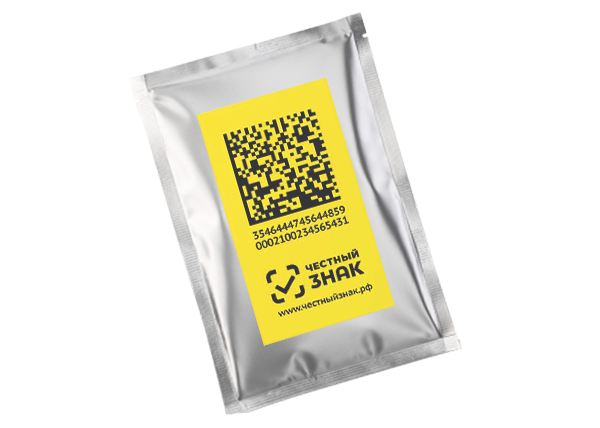
Chestny ZNAK is Russia’s national digital product tracking and marking system. Its main purpose is to fight counterfeit products, the grey economy and illegal distribution.
In practice, this means that many consumer goods sold in Russia must be marked with a unique digital code that confirms their authenticity and supports product traceability throughout the supply chain.
The system requires:
- Unique product identification: each product receives a unique digital code that enables tracking from production to final sale.
- Supply chain traceability: products can be tracked through manufacturing, storage, distribution and retail.
- Authenticity verification: consumers can scan product codes using mobile applications to check whether the product is genuine.
- Anti-counterfeiting protection: the system helps reduce counterfeit goods on the market, increasing consumer trust and protecting manufacturers’ intellectual property.
Unlike standard internal serialization, Chestny ZNAK requires communication with a state information system.
WHAT IS CONVENTIONAL SERIALIZATION?
Conventional serialization is most commonly used for:
- product traceability
- internal quality control
- compliance with pharmaceutical regulations
It involves generating a unique serial number for each individual product and printing it on the packaging in the form of a 2D DataMatrix code or barcode. This code is then linked to the company’s internal information systems, such as ERP or MES platforms, enabling the product to be tracked through production and distribution.
In more advanced systems, serialization can also include aggregation. This means linking individual product units with secondary and tertiary packaging, such as boxes and pallets, which improves logistics, stock control and supply chain visibility.
Product serialization and aggregation require dedicated equipment capable of producing high-quality codes that support reliable tracking. For example, industrial lasers, thermal inkjet printers (TIJ) and Print & Apply systems are often used for marking individual products and packaging.
KEY DIFFERENCES BETWEEN CHESTNY ZNAK AND STANDARD SERIALIZATION
- Centralized State System
Chestny ZNAK requires each product to be registered within a state platform. Every code must be generated, issued or verified through the official system. In conventional serialization, the company usually manages its own codes internally.
- Mandatory Data Exchange
With Chestny ZNAK, data related to product movement (production, import, distribution and sale) must be reported to the central database. In standard serialization, this level of external reporting is not always required.
- Cryptographic Code Protection
Chestny ZNAK codes include additional security elements and cryptographic verification, increasing technical requirements for printing equipment and software integration.
- Higher Technical Requirements for Equipment
Implementing Chestny ZNAK typically requires:
- high-resolution printers, such as TIJ, TTO or laser marking systems
- code verification systems
- serialization management software
- integration with ERP and MES systems
- aggregation solutions
Conventional serialization often requires a lower level of integration.

WHICH INDUSTRIES ARE COVERED BY CHESTNY ZNAK?
Chestny ZNAK applies to a wide range of categories, including pharmaceuticals, tobacco products, dairy products, footwear, textiles, perfumes, tyres, car parts, water and soft drinks.
The list of regulated categories continues to expand, meaning more manufacturers and exporters must implement compliant traceability solutions.
 TECHNICAL CHALLENGES OF IMPLEMENTATION

Implementing Chestny ZNAK is not just about printing a code. It requires:
- stable and precise DataMatrix printing
- reliable code verification
- packaging aggregation
- secure data exchange with the state system
Many companies assume that existing serialization systems can easily be adapted for Chestny ZNAK. In practice, this often requires additional software modules, equipment upgrades or even a complete reorganization of marking and production processes.
Understanding the difference between conventional serialization and Chestny ZNAK helps manufacturers plan investments on time, avoid export delays and ensure compliance with Russian market requirements.
Trim d.o.o. has been helping companies for 35 years by providing reliable technical solutions tailored to specific production requirements in industrial marking and labeling, product inspection and production automation.
Related content

New packaging regulations: why marking and labelling matter for export and compliance

PRODUCT MARKING AND TRACKING AS THE FOUNDATION OF AN EFFICIENT SUPPLY CHAIN